
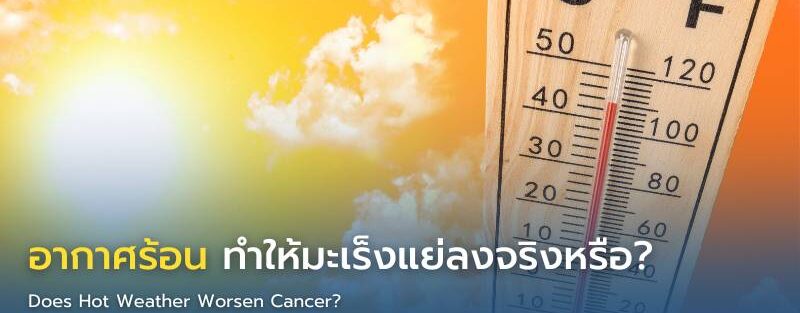
Does Hot Weather Worsen Cancer?
Can hot weather really worsen cancer? This is a common concern, especially in tropical countries like Thailand where temperatures often exceed 35°C. While extreme heat doesn’t directly cause cancer to spread, it can have indirect effects on cancer patients' overall health.
Does heat make cancer spread faster?
As of now, there’s no scientific evidence proving that high temperatures directly cause cancer cells to grow or spread faster. However, hot weather can indirectly affect cancer patients, especially those undergoing treatment, by placing additional stress on the body.
How hot weather impacts cancer patients
1. Dehydration and heatstroke risk
Cancer patients often have weakened immune systems, especially during chemotherapy or radiation. Hot weather increases the risk of dehydration and heatstroke, which can lead to serious complications.
2. Increased inflammation
High temperatures may trigger the body’s inflammatory response. Chronic inflammation has been linked to the growth of certain types of cancer cells.
3. Mental and physical discomfort
Excessive heat can cause fatigue, irritability, poor sleep, and loss of appetite — all of which can negatively impact recovery and treatment response.
4. Heat-sensitive medications
Some medications used in cancer treatment must be stored at specific temperatures. High heat may degrade the quality and reduce the effectiveness of these drugs.
Self-care tips for cancer patients during hot weather
- Stay well-hydrated by drinking at least 6–8 glasses of water daily
- Avoid going outside during peak sunlight hours
- Wear light-colored, breathable clothing
- Use fans or air conditioning when indoors
- See a doctor immediately if you experience dizziness, rapid heartbeat, or weakness
Conclusion: Heat may not worsen cancer directly, but it affects the body
Hot weather might not directly cause cancer to worsen, but it can impact the body in ways that affect recovery and treatment. Understanding how to care for yourself during extreme heat is essential — especially for those with cancer.


 EN
EN  TH
TH  MY
MY  KM
KM